

In modern logistics and export packaging, safeguarding long-term transportation safety entails more than regulating initial load tension. As cargo undergoes multimodal transportation and is exposed to diverse climatic conditions and handling scenarios, the quality of cordstrap composite strapping emerges as a critical determinant in sustaining load stability from the point of origin to the final destination.
Cordstrap composite strapping is composed of a high-tenacity polyester fiber core (which furnishes tensile strength and load-bearing capacity) and a protective polypropylene (PP) coating (that bonds fiber bundles and imparts resistance to abrasion, moisture ingress, and environmental corrosion). The rational design and precision manufacturing of this dual-layer structure underpin its stable performance during long-haul transportation.
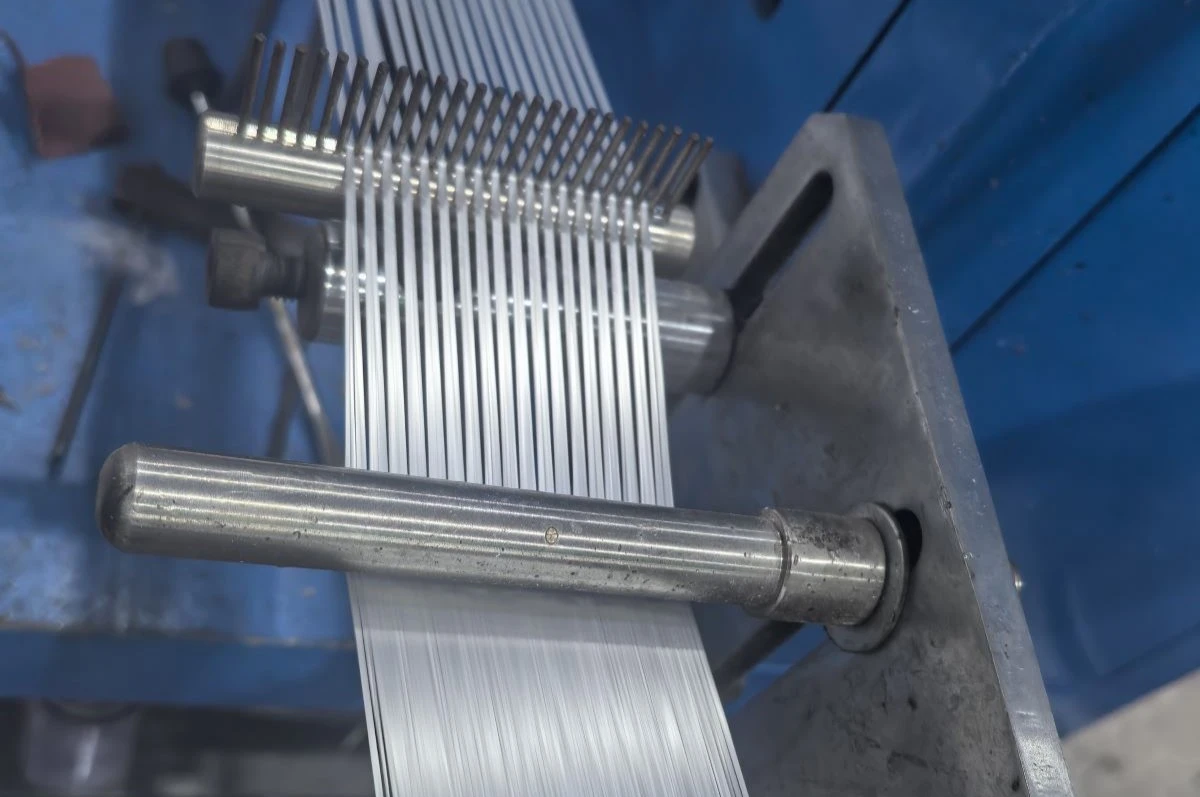

High-grade cordstrap composite strapping maintains consistent tension retention over an extended period. During long-haul shipping, cargo is subjected to continuous vibration, braking impacts, stacking pressure, and temperature variations. In contrast, low-quality strapping-characterized by uneven fiber distribution or inadequate PP coating thickness-tends to experience gradual tension attenuation due to uneven fiber stretching or premature coating wear, thereby elevating the risks of load displacement, pallet deformation, and product damage.
Environmental resistance constitutes another pivotal safety attribute. Long-term transportation exposes cargo to high humidity, salt-laden maritime atmospheres, and drastic temperature fluctuations. Premium cordstrap composite strapping, incorporating stable polyester fibers and a uniform PP coating, effectively inhibits moisture absorption and surface degradation. Conversely, inferior products are prone to softening, fraying, or premature strength degradation, which compromises load security prior to the shipment's arrival at the destination.
Abrasion resistance is also closely associated with long-term transportation safety. Throughout extended transit, strapping sustains continuous friction against cargo's sharp edges, packaging corners, and container inner walls. High-quality cordstrap composite strapping is distinguished by tightly consolidated fiber bundles and a wear-resistant PP coating, which significantly mitigates surface abrasion. By contrast, substandard alternatives are liable to exhibit early-stage fiber breakage or coating delamination, creating latent hazards that may culminate in sudden strapping failure.
Compatibility with steel wire buckles is equally indispensable for transportation safety. Well-manufactured cordstrap composite strapping fits snugly into buckles, ensuring uniform load distribution and reliable locking performance. In contrast, low-grade strapping may incur slippage or deformation within the buckle under sustained load, further exacerbating safety risks during long-term transportation.

ANPACK's cordstrap composite strapping systems are developed on the basis of in-depth insights into real-world transportation scenarios. By focusing on three core dimensions-consistent polyester fiber quality, durable PP coating, and stable matching performance with steel wire buckles-ANPACK delivers solutions for logistics professionals that enhance cargo safety, reduce damage-induced losses, and ensure reliable performance throughout long-distance and extended-duration shipments.
The selection of high-quality cordstrap composite strapping is not merely a packaging decision; it represents a long-term investment for enterprises in transportation safety, operational efficiency, and brand reputation protection.